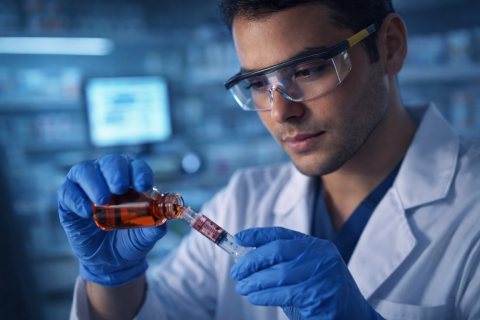
Pharmacists are medication experts who play a critical role in patient care, disease management, and public health. Highly trained in pharmacotherapy, pharmacists ensure medications are safe, effective, and used appropriately. Pharmacists work collaboratively with physicians, physician assistants, nurses, and other healthcare professionals in numerous settings including community pharmacies, hospitals, clinics, research, and public health. Earning a PharmD (Doctor of Pharmacy) degree prepares graduates for direct patient care and non-traditional roles such as pharmaceutical research, regulatory affairs, health informatics, and policy.
Content Areas | RPI Courses |
|---|---|
Biology w/Lab (2 Semesters) |
|
Microbiology w/Lab (1 semester) |
|
Biochemistry w/Lab (1 semester) |
|
Human Anatomy & Physiology w/Lab (1-2 semesters) | Cross-Registration with other colleges and universities |
Chemistry w/Lab (2 Semesters) |
|
Organic Chemistry w/lab (2 Semesters) |
|
Physics w/Lab (1-2 Semesters) |
|
Calculus (1 semester) |
|
Statistics (1 semester) |
|
English (1-2 semesters) |
|
Social Science (1-2 semesters) |
|
Some PharmD programs accept courses completed at community colleges, but most strongly prefer coursework completed at four-year institutions, especially upper-level science courses. Some programs accept AP credit while others require college-level coursework. This list is not exhaustive and many courses could satisfy these content areas. Be sure to verify the content area requirements for the specific schools you are interested in. You can find this information on their program websites as well as PharmCAS’s PharmD School Directory.
Applications to PharmD (Doctor of Pharmacy) programs are submitted through PharmCAS (Pharmacy College Application Service), a centralized application platform used by the majority of U.S. pharmacy schools. Primary applications include applicant identifying information, official transcripts, prerequisite coursework information, letters of recommendation, and a personal statement. Many PharmD programs also strongly encourage or require pharmacy-related experiences, such as shadowing, employment, or volunteering in pharmacy or healthcare settings. Historically, some programs required the PCAT (Pharmacy College Admission Test); however, the PCAT has been discontinued, and most PharmD programs no longer require an entrance exam, though a small number may accept or recommend the GRE. Following submission of the primary application, some schools require completion of program-specific supplemental applications, which may include short-answer questions and/or additional documentation. Select applicants are then invited to interview with pharmacy AdComs (admissions committees).
