Medicine (MD/DO)

If you’re drawn to diagnosing complex problems, building long-term patient relationships, and working at the intersection of science and service, medicine may be a fit for you. Physicians train broadly in medical school and then specialize through residency (and sometimes fellowship). As you explore, you’ll want to think about the kind of environment you thrive in (hospital vs. clinic, fast-paced vs. longitudinal care), the patient populations you’re most interested in serving, and what you want your future scope of practice to look like.
In the U.S., physicians earn either an MD (Doctor of Medicine) or a DO (Doctor of Osteopathic Medicine) degree. Both MDs and DOs are fully licensed physicians who diagnose illness, prescribe medications, perform procedures, and practice in every medical specialty and healthcare setting. The core medical training and residency pathways are largely the same. DO programs include additional training in osteopathic principles and hands-on musculoskeletal techniques, with an emphasis on whole-person, preventative care. As you explore medicine, consider which philosophy and training environment best align with your goals. You can apply to MD programs, DO programs, or both and decide which program to pursue based on the schools you’re accepted to.
Dentistry (DDS/DMD)

Dentistry blends clinical precision with hands-on problem solving and relationship-centered care. Dentists diagnose and treat conditions affecting the teeth, gums, and oral structures, and many build long-term relationships with patients over years. If you like tangible outcomes, patient education, and a career that combines science with fine motor skill and artistry, dentistry is worth exploring.
Optometry (OD)

Optometrists provide primary eye and vision care, from routine exams and vision correction to detecting and managing many eye-related conditions. If you like patient-facing clinical work, technology, and a specialty that blends preventative care with problem solving, optometry can be an excellent fit.
Physician Assistant (PA)
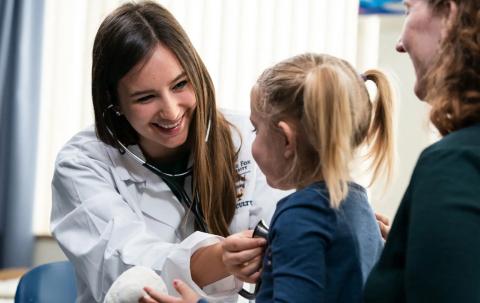
PAs (Physician Assistants) are highly trained medical professionals who practice medicine in collaboration with physicians across nearly every specialty and clinical setting. While PAs are not physicians, they are licensed to perform many of the same patient-care duties, including conducting physical exams, diagnosing illnesses, ordering and interpreting tests, prescribing medications, and assisting in surgery. Unlike physicians, PAs complete a master’s-level professional program rather than medical school and residency, allowing them to enter clinical practice more quickly. PAs work under a collaborative practice model, meaning they practice with physician supervision while maintaining a high degree of autonomy, and they can change specialties without completing additional formal residency training.
Veterinary Medicine (DVM/VMD)

Veterinarians diagnose, treat, and prevent disease in animals. While many veterinarians work in companion animal practice (e.g., dogs and cats), the profession also includes large animal and food-animal medicine, wildlife and zoological medicine, public health, biomedical research, pathology, regulatory medicine, and industry. Unlike physicians who treat only humans, veterinarians are trained to work across multiple species and biological systems, requiring broad medical knowledge and adaptability. Veterinarians earn the Doctor of Veterinary Medicine (DVM or VMD) degree and play an essential role in animal health, food safety, public health, and scientific research.
Pharmacy (PharmD)

Pharmacists are medication experts who play a critical role in patient care, disease management, and public health. Highly trained in pharmacotherapy, pharmacists ensure medications are safe, effective, and used appropriately . Pharmacists work collaboratively with physicians, physician assistants, nurses, and other healthcare professionals in numerous settings including community pharmacies, hospitals, clinics, research, and public health. Earning a PharmD (Doctor of Pharmacy) degree prepares graduates for direct patient care and non-traditional roles such as pharmaceutical research, regulatory affairs, health informatics, and policy.
Nursing (RN)

Nursing is a dynamic, patient-centered health profession focused on the assessment, treatment, education, and advocacy of individuals, families, and communities. Registered Nurses (RNs) play a central role in healthcare delivery, working collaboratively with physicians, physician assistants, and other health professionals while often serving as the primary point of patient contact. Nurses practice in a wide range of settings, including hospitals, clinics, schools, public health organizations, research institutions, and community agencies, and can specialize in areas such as pediatrics, critical care, mental health, oncology, or public health. For RPI graduates who already hold a bachelor’s degree, nursing offers multiple accelerated and graduate-entry pathways that allow students to transition into the profession while building on their existing academic foundation:
- Accelerated Bachelor of Science in Nursing (BSN)
- A fast-paced, full-time undergraduate program (often 11–18 months) leading to an RN license.
- Direct-Entry / Master’s Entry Nursing Programs (MSN)
- Designed for those who already hold a bachelor’s degree. Students earn RN eligibility first (12-18 months) and then complete graduate-level nursing training (12-24 months).
